
How to Control Crud and the Third Phase in Copper Solvent Extraction
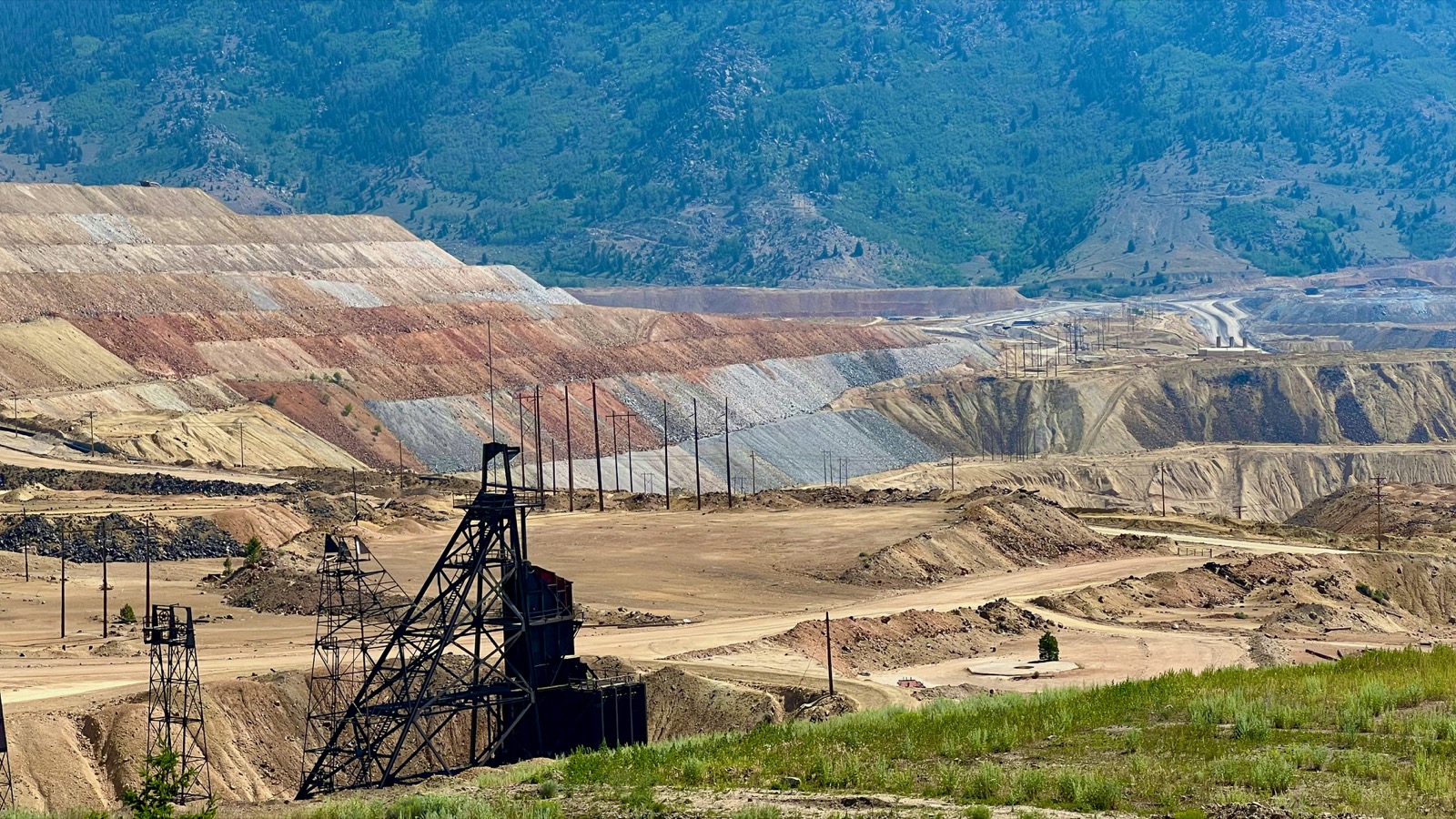
Walk into almost any copper solvent-extraction (SX) plant today and you will hear the same complaint: the organic phase is not separating the way it used to. The settler is slow, a ragged band of emulsion sits at the interface, and operators are skimming more crud than ever before.
The reason is simple. The copper industry is being pushed — by demand, by price, and by geology — to work harder with poorer feedstocks. And the dirtier the feed, the more crud it makes. This article explains where the crud and the “third phase” come from, what they cost, and how a new class of phase-separation aid is helping plants win that battle.
Copper keeps getting harder to win
Copper ore grades have been falling for decades. Where a high-grade operation once fed 1.5% copper to its leach pads, many producers today are running on 0.6% or less. The easy ore is gone, and the economics of every tonne now depend on squeezing value out of what used to be waste.
That is why a growing number of small and mid-size hydrometallurgical plants — particularly across Africa's Copperbelt — have turned to stripping ore and tailings. Stockpiles that older operations discarded still carry a meaningful 0.1–0.3% copper. With the right leach chemistry, that metal is recoverable.
One point deserves emphasis: this feedstock only works when it is sourced legitimately. Reprocessing tailings and stripping ore from licensed, compliant operations is a textbook case of turning waste into resource. It should always be treated as such — properly permitted, properly documented, properly handled.
The catch is called crud
Cheaper feed comes with a hidden cost. Stripping ore and tailings carry far more fine solids than run-of-mine ore — clays, silica and suspended mineral fines that the leach circuit cannot fully settle out. When this dirty pregnant leach solution (PLS) meets the organic phase in the mixer-settler, those fines concentrate at the organic–aqueous interface.
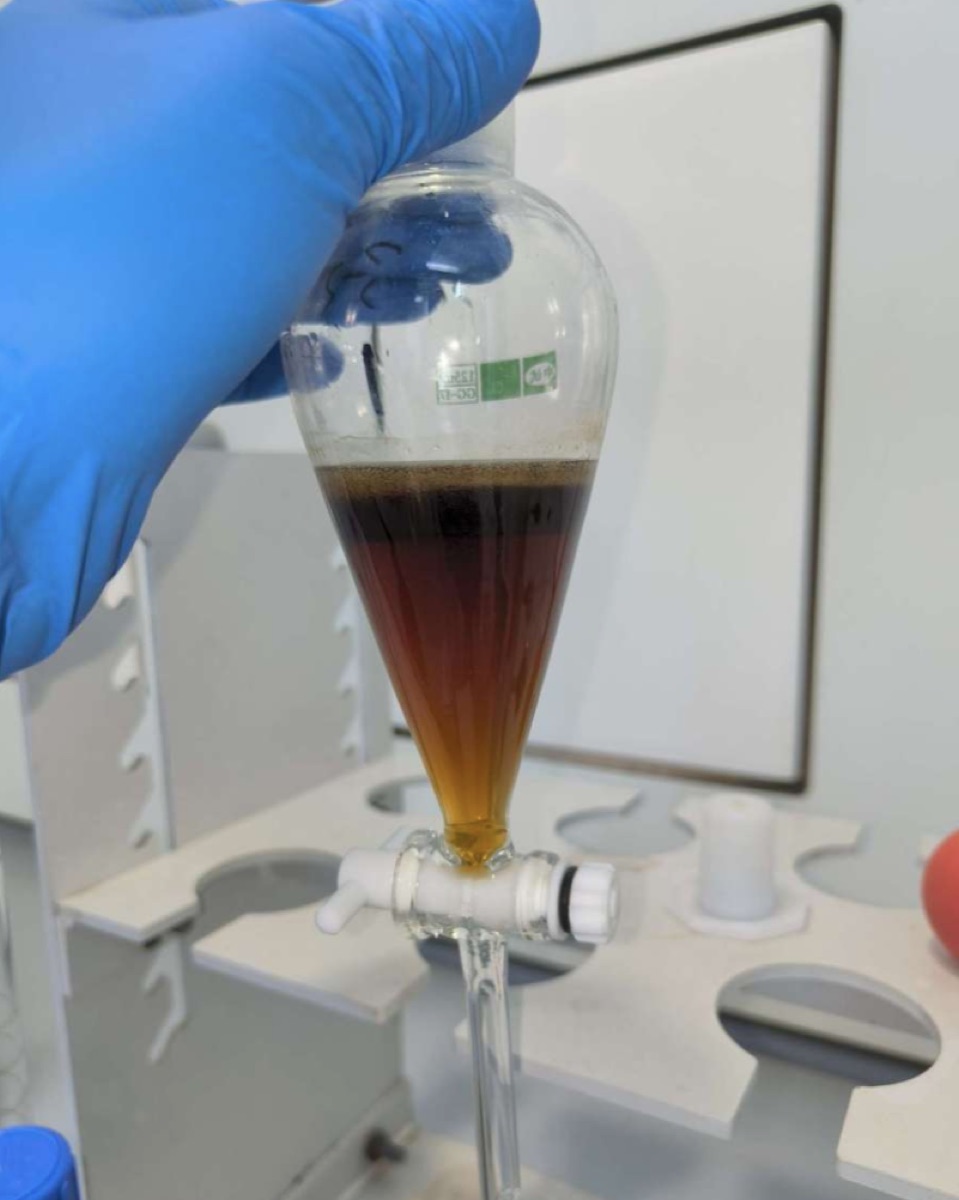
There, they mingle with degraded organic and trapped aqueous droplets to form a stable emulsion — the crud, also called the “third phase.” It is neither clean organic nor clean aqueous, and it will not settle on its own. Instead it builds into a thick, spongy band that sits right where the two phases are supposed to part.
Why a little crud costs a lot
Crud may look like a nuisance, but it is a profit leak. Left unchecked, it works against the plant in several ways at once:
- Slower phase separation — the settler holds less throughput, and the plant runs below nameplate capacity.
- Copper entrainment — fine organic droplets and crud carry copper back into the raffinate, cutting recovery.
- Higher organic losses — crud traps extractant and diluent, forcing more top-up of expensive organic.
- More downtime — dirty circuits need frequent skimming, cleaning and stripping, pulling operators off production.
Skimming harder — or solving it at the source
The traditional response is mechanical: skim the crud off the interface, treat it with coagulants and decant whatever organic can be salvaged. It works, but it is slow, messy and incomplete. As soon as more dirty PLS enters the circuit, the crud returns.
A cleaner answer is to stop treating the symptom and treat the interface itself. If the fine particles and degraded-organic micelles can be pulled together into dense, low-water clumps, the crud stops being a spongy emulsion and becomes something that is easy to remove — and the plant gets its fast, clean phase separation back.
The powder that caught on in Zambia
That is exactly the idea behind Deyuan's complexing agent, DY-CA-01. Over the past two years its sales in Zambia — where tailings and stripping-ore feedstocks have become everyday reality — have grown explosively, as plants that were fighting chronic crud adopted it and stayed with it.
The formulation is a patented invention (Chinese invention patent CN 105039696 A), and its published testing tells the story in numbers: more than 90% of interface crud removed, and phase-separation efficiency improved by more than 50%.
DY-CA-01 is a gray powder that works by physical complexation, not chemical reaction. It does not interfere with the extractant or change the chemistry of the circuit. Instead it adsorbs onto the fine solids and degraded-organic particles, drawing them together into dense agglomerates that float or settle as a compact, easily-skimmed mass.
Because the agglomerates are dense and hold little water, they can be removed almost completely — leaving a clean interface, faster settling and a noticeably decolorized, reusable organic phase. It is compatible with the mainstream copper extractants (LIX and BK series) and with kerosene-based diluents, so it slots into an existing circuit without disruption.
For an operator, the effect is the one that matters: less time skimming, more time producing — and a cleaner system that keeps running.
Related product
DY-CA-01
Complexing agent · phase-separation aid
Full specifications are available in the technical data sheet — request a sample and our technical sales team will support your evaluation end to end.